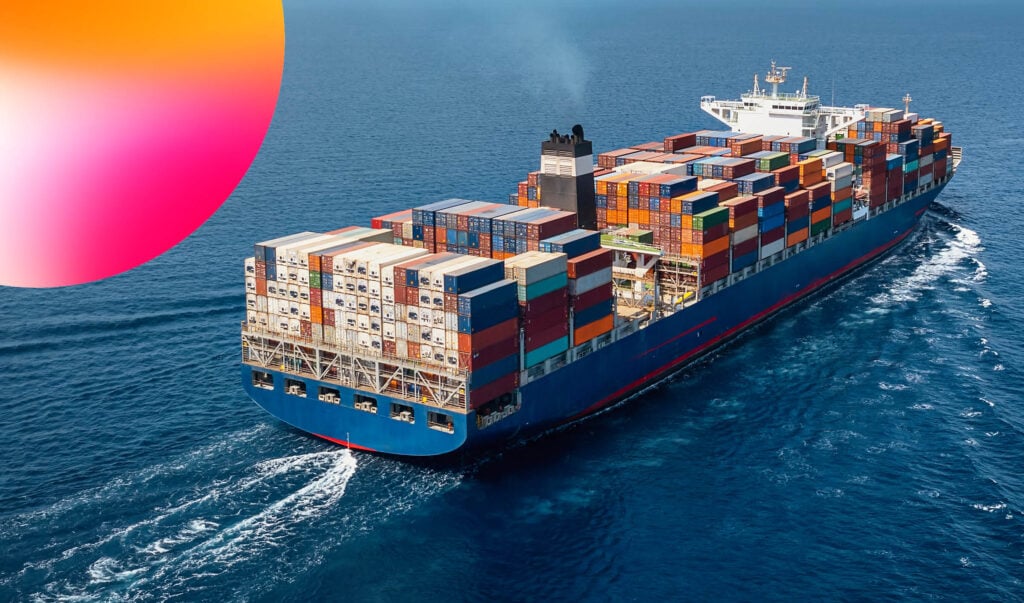
Supply chain shocks are the new normal. Rapid shifts in geopolitics, transport disruptions, and labour shortages constantly challenge standard operations — and organisations must now prepare for a global operating environment of permanent disruption.
According to PwC’s 2025 Digital Trends in Operations Survey, 87% of operations and supply chain leaders are prioritising more flexible operations to combat rising geopolitical risks. The same survey found that 91% say US trade policy changes are prompting significant supply chain strategy changes.
Corporate social responsibility (CSR) provides the strategic framework to build this resilience. Putting people and sustainable practices at the core of your supply chain strategy protects your business by building long-term stability — and it equips you to anticipate disruptions and respond quickly.
What is corporate social responsibility in a supply chain context?
Corporate social responsibility is an organisation’s commitment to ethical and sustainable operations. A genuine CSR policy holds the business accountable for its impact on the world — and that accountability must extend deeply into global supply chain and sourcing practices to be meaningful.
There are four primary pillars of supply chain CSR. A holistic approach across all four maximises positive impact and, critically, reinforces your resilience against the distinct operational threats that each pillar addresses.
What are the four pillars of supply chain CSR?
1. Environmental responsibility: how does it protect your operations?
Environmental responsibility means taking active steps to minimise waste and pollution across your network — tracking air emissions, water usage, and energy consumption to identify environmental risks before they disrupt productivity, logistics, or regional workforces.
Framed through a resilience lens, environmental management reduces your exposure to climate disruptions. Extreme weather events and resource scarcity can instantly halt agricultural, manufacturing, or logistics operations. Proactive environmental management — and supporting suppliers to mitigate major threats — protects your business from unpredictable physical supply chain shocks and shields your organisation from increasingly strict regulatory penalties.
2. Ethical responsibility: why do working conditions affect supply chain stability?
Ethical responsibility relates to business governance and how your organisation treats people. Prioritising ethical practices means addressing key social risks — forced labour, discrimination, poor health and safety — that often remain hidden deep within complex multi-tier supply networks.
The scale of these risks is significant. According to a 2024 ILO report, roughly 2.41 billion workers are exposed to excessive heat conditions at work each year — risks that fall disproportionately on workers in agriculture, construction, and environmental services. Protecting workers creates a stable, capable workforce that keeps your supply chain moving.
Globally recognised methodologies like SMETA help businesses assess ethical standards at individual worksites across supply chain regions. SMETA evaluates working conditions against international labour standards and local laws, providing a high level of protection for vulnerable workers and verifiable evidence for reporting.
3. Philanthropic responsibility: how does community investment build resilience?
Companies with strong philanthropic CSR support charitable initiatives and create partnerships with local organisations — for example, backing programmes that promote gender equality in agriculture or skills development in sourcing regions.
This investment builds community resilience in the specific regions where you operate. When local communities thrive, they provide a more reliable and secure operating environment. Deloitte’s 2025 Gen Z and Millennial Survey found that 89% of Gen Z employees want purpose-driven work, and 75% scrutinise potential employers’ societal impact before applying. Purpose-driven organisations attract stronger talent and build more durable supplier relationships — creating a safety net during times of global disruption.
4. Economic responsibility: how does supplier financial stability protect your business?
Economic responsibility considers the wider economics of your financial decisions: paying living wages, supporting supplier development, and creating a robust economic ecosystem across your network.
The stakes are high. McKinsey research shows that supply chain disruptions cost the average organisation 45% of one year’s profits over a decade, while Dun & Bradstreet’s Global Bankruptcy Report 2025reports that 65% of tracked economies saw rising corporate bankruptcies in 2024 — the highest level in over a decade. Financial stability across your supply chain prevents supplier bankruptcy during economic downturns. Resilient suppliers are better equipped to absorb economic shocks without halting production.
| 87% of supply chain leaders prioritising flexible operations (PwC, 2025) | 2.41bn workers exposed to excessive heat annually (ILO, 2024) | 45% of annual profits at risk from a single decade of disruptions (McKinsey) | 65% of tracked economies saw rising bankruptcies in 2024 (D&B, 2025) |
Sources: PwC 2025 Digital Trends in Operations Survey; ILO Ensuring Safety and Health at a Changing Climate, 2024; McKinsey Supply Chain Resilience Research; Dun & Bradstreet Global Bankruptcy Report 2025
What do investors and stakeholders now expect from supply chains?
Investors and stakeholders have sharply raised their expectations for ESG accountability. The evidence is unambiguous across three major surveys:
| Source | Key finding |
| EY Global Institutional Investor Survey 2024 | 85% of investors increased their use of ESG information over the past year. 78% believe companies should make ESG investments even if it reduces short-term profits. |
| PwC Global Investor Survey 2024/2025 | Over 70% of investors say companies should incorporate sustainability directly into business strategy. 84% believe companies should maintain or increase investment in climate adaptation. |
| Georgeson Global Institutional Investor Survey 2024 | 77% of investors are prioritising ESG issues with clear financial relevance. 79% report their clients continue to demand updates on ESG engagement and outcomes. |
Meeting these expectations is not optional. Failing to identify and address ESG risks causes real harm — to workers, to communities, and ultimately to your organisation’s reputation and legal standing. Businesses that treat CSR as a genuine commitment, rather than a compliance obligation, are better placed to build lasting trust and attract capital on competitive terms.
Four strategies to build CSR-driven supply chain resilience
A mature CSR resilience programme unites strategy and action across four interconnected areas: visibility, risk management, value creation, and ecosystem partnerships.
1. Build visibility through data
Mapping supplier locations and activities is the foundation of both CSR compliance and operational resilience. You can only manage the risks you can clearly see.
Intelligent data platforms centralise and automate data collection, risk assessments, and supplier engagement at scale. According to Sedex’s Total Economic Impact™ Study, deploying Sedex solutions could reduce sustainable supply chain labour management costs by up to 70% and deliver estimated savings of $304,000 of at-risk profit retained through satisfying a greater volume of supply chain transparency requirements.
2. How should businesses manage social and ethical risks across supply tiers?
Social concerns like modern slavery and corruption threaten both brand reputation and operational stability. Businesses must identify where these ethical concerns represent the highest risk across their sourcing network — and address them proactively.
This is also a compliance imperative. The EU’s Corporate Sustainability Due Diligence Directive (CSDDD) and the US Uyghur Forced Labor Prevention Act (UFLPA) require businesses to demonstrate active due diligence or face fines of up to 3% of global turnover and goods seizure at the US border respectively.
Technology-powered risk screening tools help businesses prioritise the most severe risks for immediate action. Site-specific assessments like SMETA audits allow businesses to investigate high-risk issues in depth, identify gaps in prevention measures, and support suppliers with corrective action plans.
3. Identify value creation opportunities through CSR reporting
CSR reporting frameworks are not just compliance tools — they uncover genuine value creation opportunities. Procurement leaders can identify inefficiencies, develop products that use materials more efficiently, and benchmark supplier performance to drive targeted improvements.
Verified site-level assessments are critical for making supplier data actionable. The SMETA audit provides a standardised framework measuring performance across four key pillars: labour standards, health and safety, environment, and business ethics — transforming raw data into a reliable understanding of supplier integrity and operational compliance.
4. How do supplier partnerships strengthen resilience?
Strong partnerships with suppliers and industry peers are essential for widespread CSR progress. Sharing commitments and resources fosters a culture of transparency and mutual accountability — the foundation of a truly resilient supply network.
Gartner research finds that only 29% of supply chain organisations have developed at least three of five key competitive characteristics needed for future readiness — with leaders distinguished by long-term, deliberate relationship-building strategies rather than short-term reactive approaches. The organisations that invest in supplier collaboration now are the ones best equipped to respond when the next crisis hits.
The Sedex global community connects more than 100,000 businesses sharing CSR data from individual factories, farms, warehouses, and supply chain worksites worldwide. Members discuss challenges, close knowledge gaps, and build partnerships to drive social responsibility at scale.
CSR in practice: what good looks like
Organisations with strong CSR foundations demonstrate measurable improvements in compliance, risk reduction, stakeholder trust, and long-term value creation. Proactive, data-driven strategies enable businesses to address risks before they escalate and strengthen relationships with suppliers, partners, and stakeholders — building supply chains that are simultaneously more ethical and more commercially robust.
How do you manage supply chain disruption? Six practical tips
Today’s global supply chains face constant threats from geopolitical, social, and environmental events. The level of impact varies depending on the underlying infrastructure of your supply chain. These six data-driven steps help you manage and mitigate disruption proactively.
1. Map your supply chain across multiple tiers and sites
Visibility starts with mapping: identifying your suppliers, practices, and exposures across Tier 1, Tier 2, and beyond. With this intelligence, you can identify which shocks are most likely to affect your network and prioritise areas of greatest concern to distribute resources efficiently.
2. Use technology to identify and monitor risk
Technology platforms like Sedex are fundamental enablers of CSR at scale. They centralise and automate data collection, risk assessments, and supplier engagement — providing teams with actionable supply chain intelligence and streamlined workflows. This digital backbone allows even complex global supply chains to implement resilience strategies with speed and agility.
3. Collaborate with suppliers as partners, not targets
A more sustainable supply chain is a more resilient one. Collaborate with your suppliers to define shared standards, understand their unique challenges, and build mutual trust. Open dialogue creates long-term operational resilience: when a crisis hits, strong supplier relationships ensure you receive priority support.
4. Stay current on supply chain legislation
The regulatory landscape is constantly evolving. Staying informed is essential for avoiding operational restrictions and financial penalties. Three frameworks define the current compliance landscape:
- North America — UFLPA: The US Uyghur Forced Labor Prevention Act prohibits the import of goods produced with forced labour from China’s Xinjiang region. Non-compliance results in goods seizure at the US border.
- European Union — CSDDD: The Corporate Sustainability Due Diligence Directive mandates that large companies identify, prevent, and mitigate adverse human rights and environmental impacts in their operations and value chains. Non-compliance carries fines of up to 3% of global turnover.
- Asia-Pacific: The sustainability landscape is rapidly shifting from voluntary guidance to enforceable law, moving through a three-stage maturity curve: voluntary frameworks, mandatory reporting, and mandatory due diligence.
5. Proactively prepare for disruption
The best way to manage supply chain disruption is through comprehensive anticipation and preparation. Understanding how different types of disruptions affect your specific network means you are better prepared when crises occur. Proactive risk management should incorporate global events — geopolitical, environmental, and social — linked to your operational landscape.
6. Do not overlook service providers
Many procurement teams perceive service contracts as low-risk. In reality, essential services like cleaning, security, and transport frequently carry significant human rights risks. These service supply chains often involve vulnerable worker populations and hidden subcontracting tiers.
Subcontracting multiplies risk: accountability becomes fragmented and oversight is severely weakened. Apply the same rigorous supply chain standards and due diligence activities to service providers as to goods suppliers. Extending visibility into your service supply chain eliminates critical blind spots in your resilience strategy.
The bottom line
Supply chain resilience is not built overnight. It is the result of continuous improvement and commitment to responsible business practice at every level of your supply chain.
Organisations that act now will be better equipped to meet regulatory demands, retain consumer trust, and thrive in turbulent markets. By embedding CSR into your operations — building visibility, managing risk, creating value, and deepening supplier partnerships — you shift from reactive crisis management to proactive, strategic resilience.
Take the next step with Sedex
FAQs